After a semester of dedicated work, seeing it all together in the Black Box was thrilling. Up until recently, we’ve only been able to work the installation in bits and pieces, as time in the studio is preciously limited. At last, the world we created was truly immersive and fully responsive, a garden of sound complemented beautifully by lighting and animations, made real by our note-covered sculptures and tools.
Getting to this point was no small feat. What started as an aimless idea based on a creative art project made by one of us over winter break eventually grew into a fully-fleshed concept, making use of a variety of advanced technologies. We felt that the Black Box Studio was the ideal place to house this garden, thanks to its impressive spatial audio, motion capture, and projection capabilities.
Plant & Tool Design
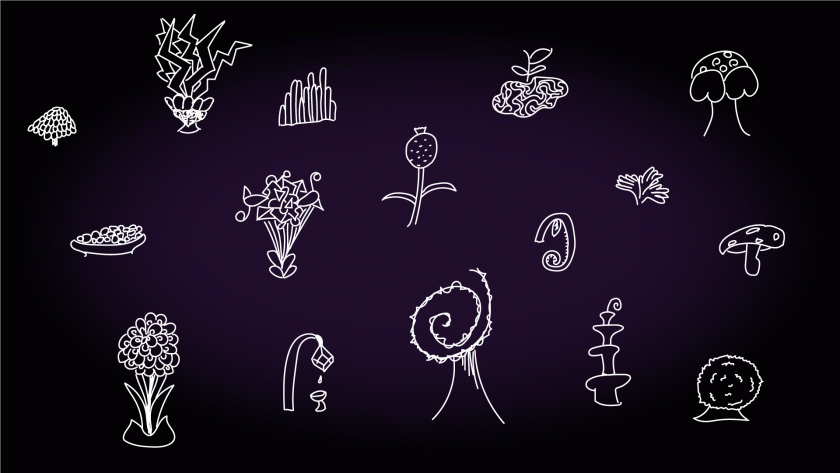
At the beginning of the semester, one team member brought in the remains of an old notebook, the pages covered in watercolor paint and folded in this interesting way to resemble flowers. With our desired focus of mindfulness and meditation in mind, we conceptualized a thriving garden, each plant uniquely incorporating our old class notes.
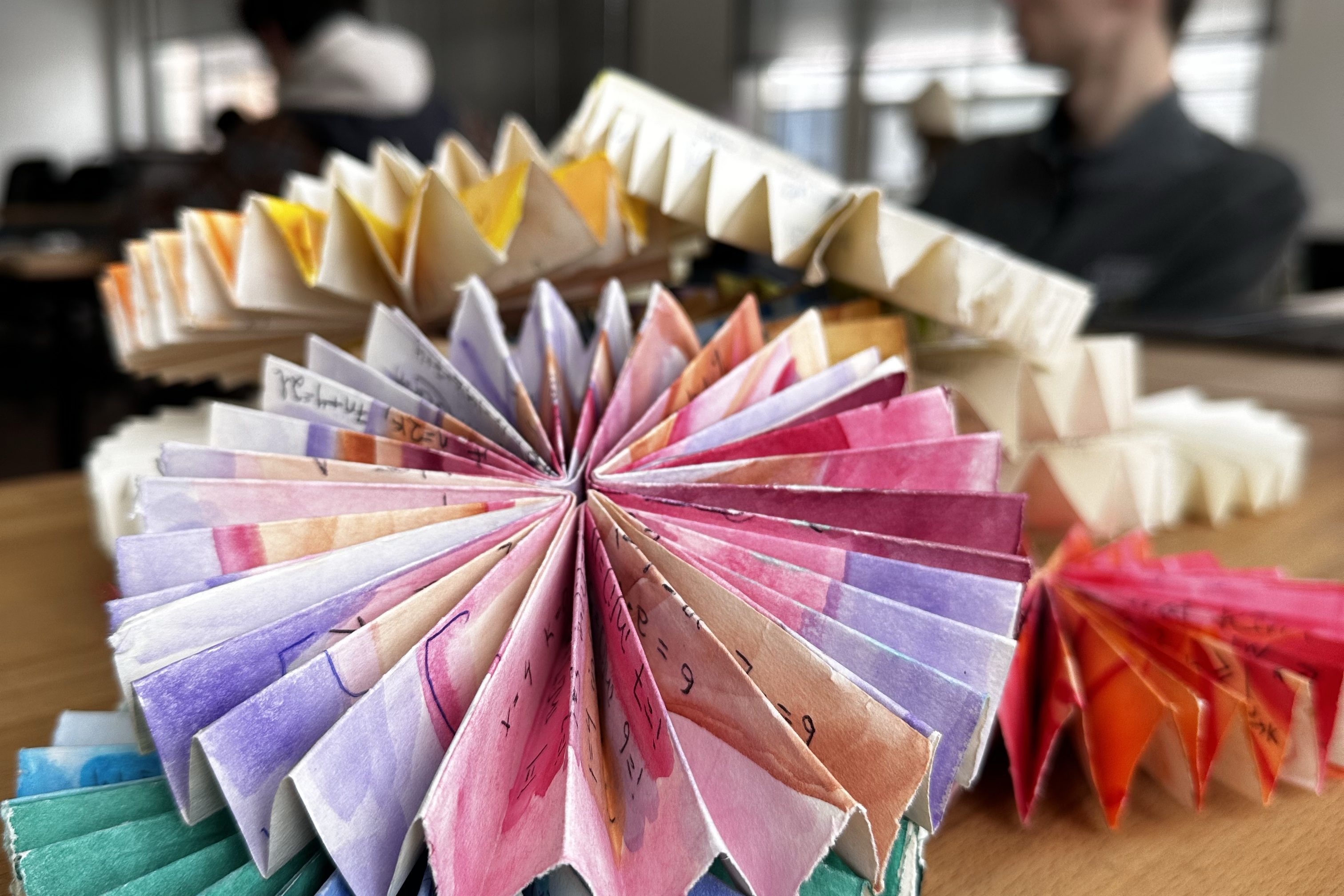
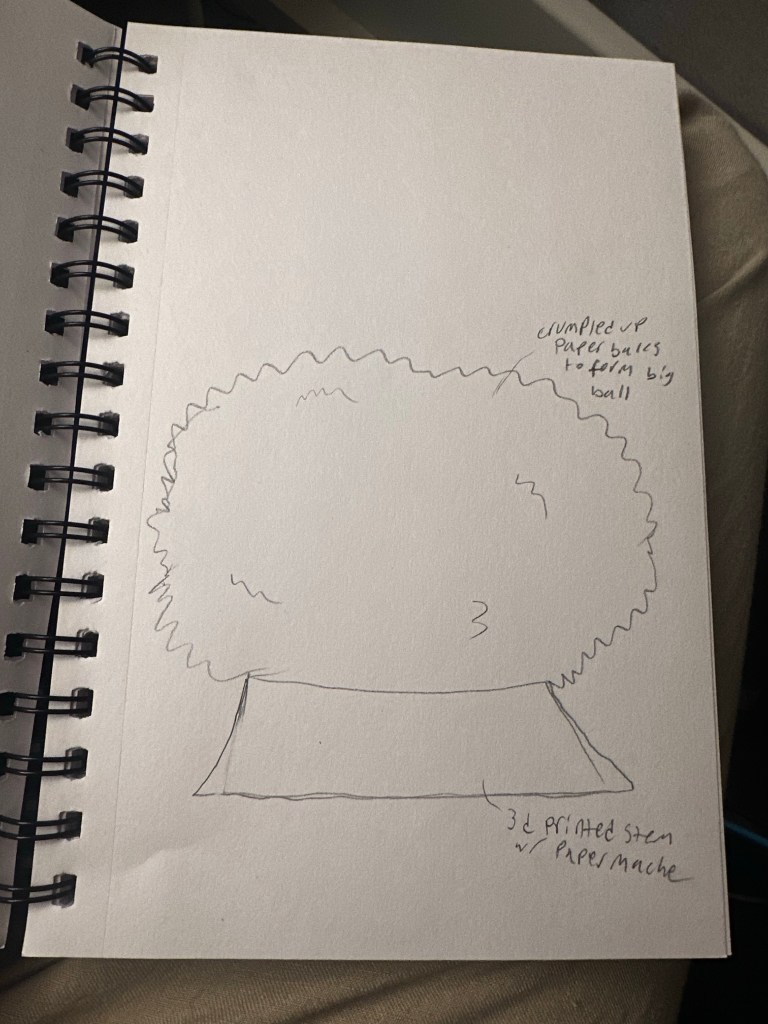
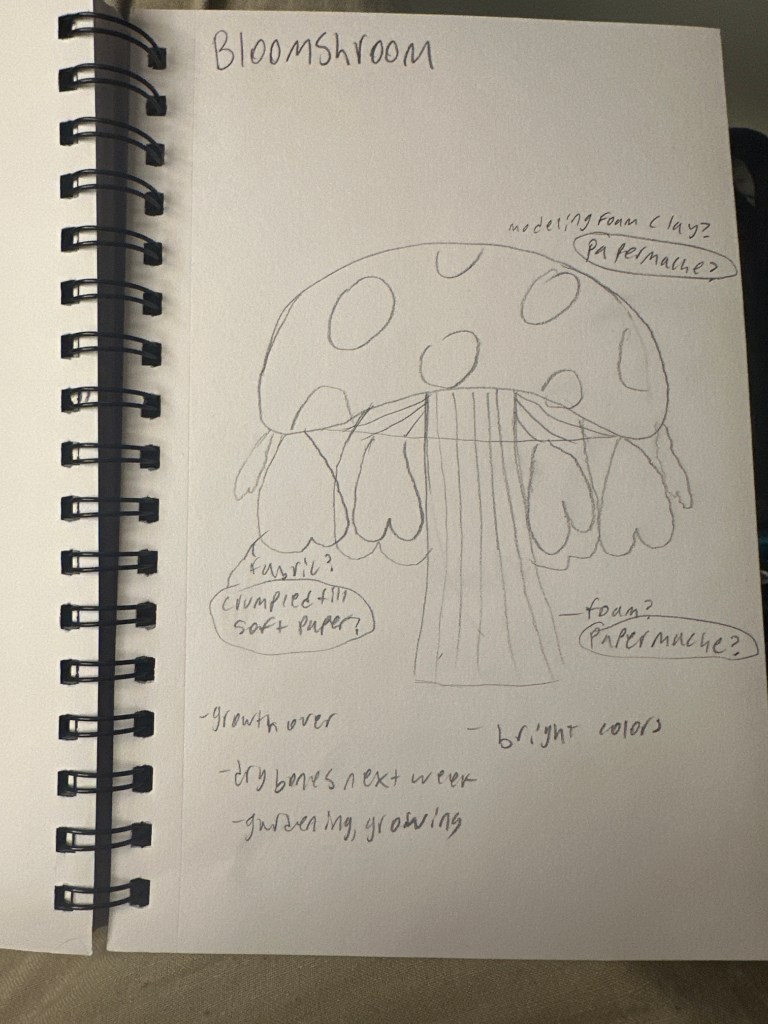

Our early plant designs were fleshed out via prototypes and, with those, we designed a miniature garden experience that some fellow classmates participated in for some initial UX testing. It was certainly a challenge to translate the interactions we observed from a tiny setup in the corner of a bright classroom to a large dark studio space. Nevertheless, we noticed with our small plant prototypes that our participants were mostly looking down at their feet. We decided it was important to make the actual plants much larger, in order to guide a participant’s gaze up toward the animations that would be projected behind them.


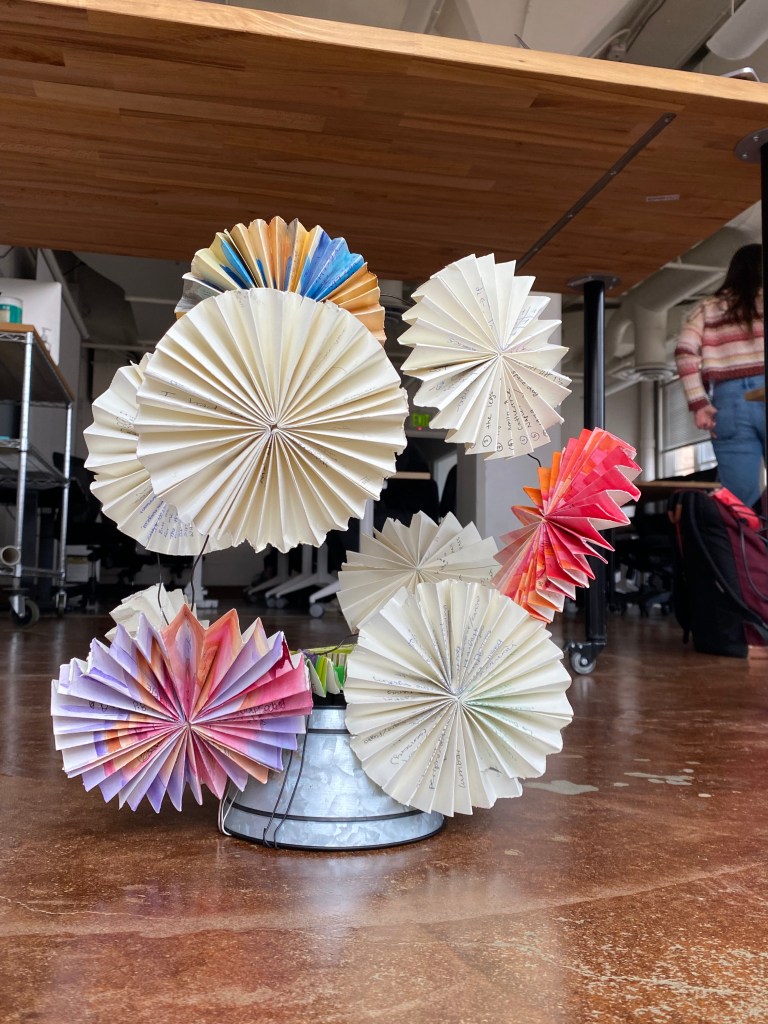
Making the prototypes helped us better understand the materials for our plant sculptures and informed our process for creating the final products. Some of the major takeaways were that watercolor does not apply well after mod-podge, wire is fairly flimsy and needs structural reinforcement as well as a sturdy base, and overall we were going to need a lot of notes in order to make our plants to the desired scale. Thanks to the donations of several friends and peers, we were able to acquire a sufficient collection of handwritten notes covering a variety of school subjects, such as psychology, math, and physics.
Throughout the process, we experimented with different techniques for applying watercolor and different heights for each plant. Because our notes were sourced from a variety of notebooks and paper types, they were not as color-cohesive as we’d hoped. However, we agreed that the cohesion of concept as well as the lighting and environment in the Black Box brought it all together, and created a beautiful and impactful visual experience.
Animation Design
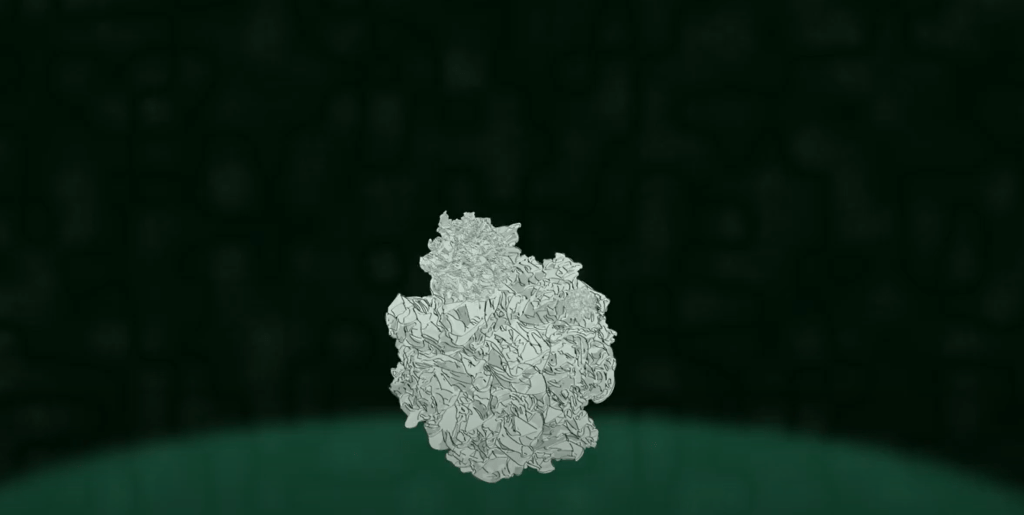
The animations for this installation went through several different iterations. These animations arguably defined the overall aesthetic for the piece, so it was important for us to make them capture the overall mood and tone we were going for. Our prototype animations are evidence that our initial aesthetic concept was dark and moody, with pops of color in the foreground.
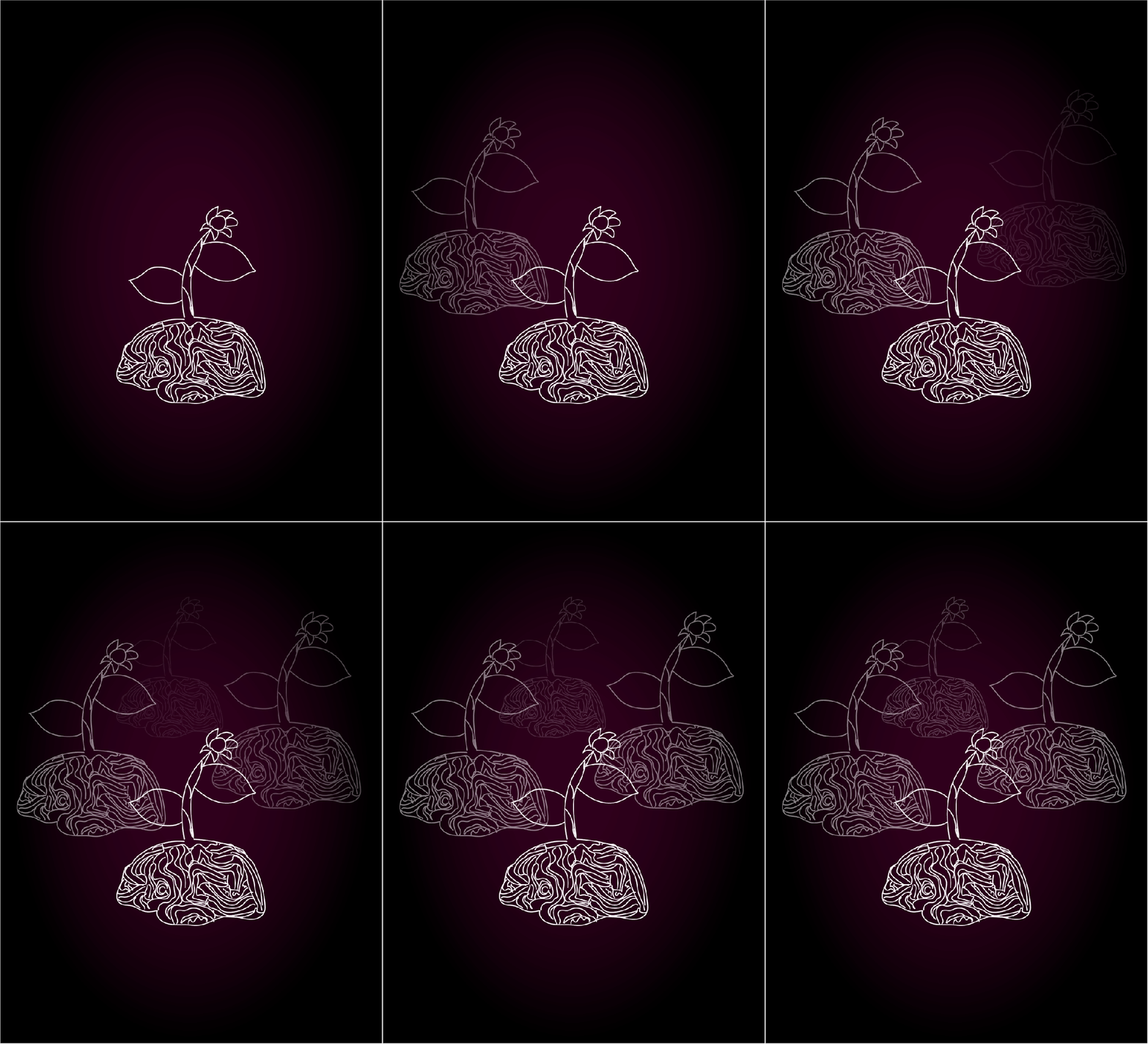
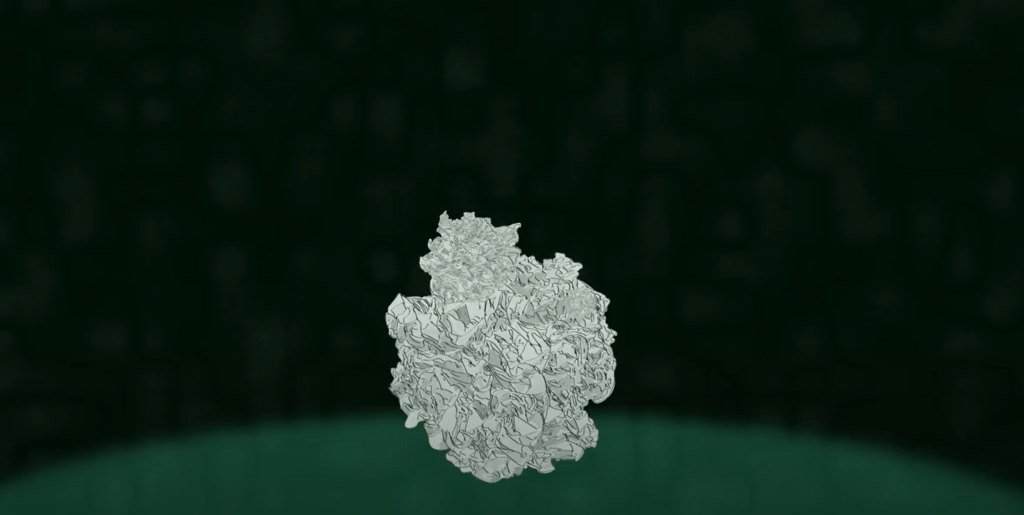
Eventually, with some valuable feedback, we decided to focus on the background as a way to set the scene and build a world made of notes, a world in which our paper plants could conceivably belong and thrive.
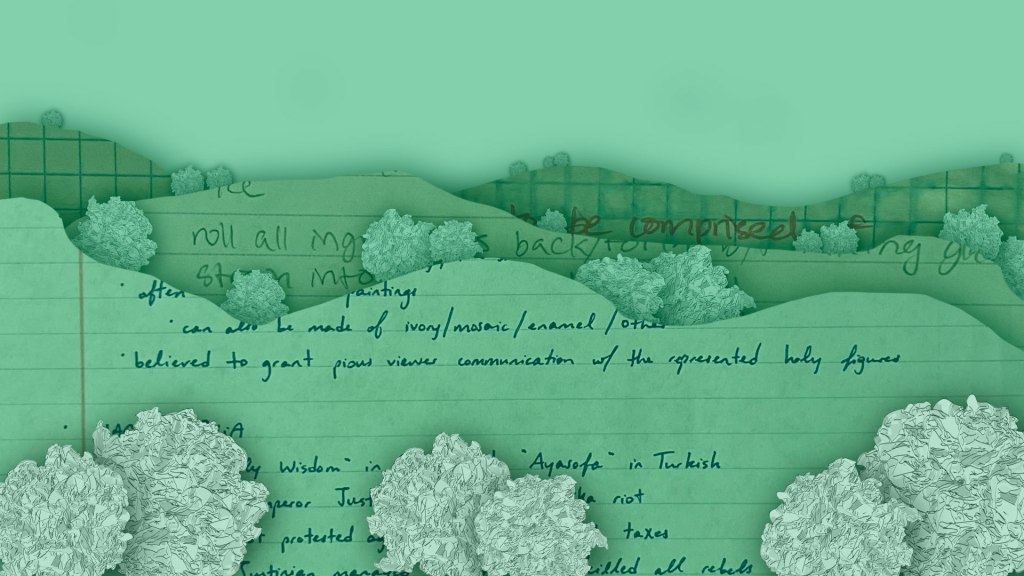
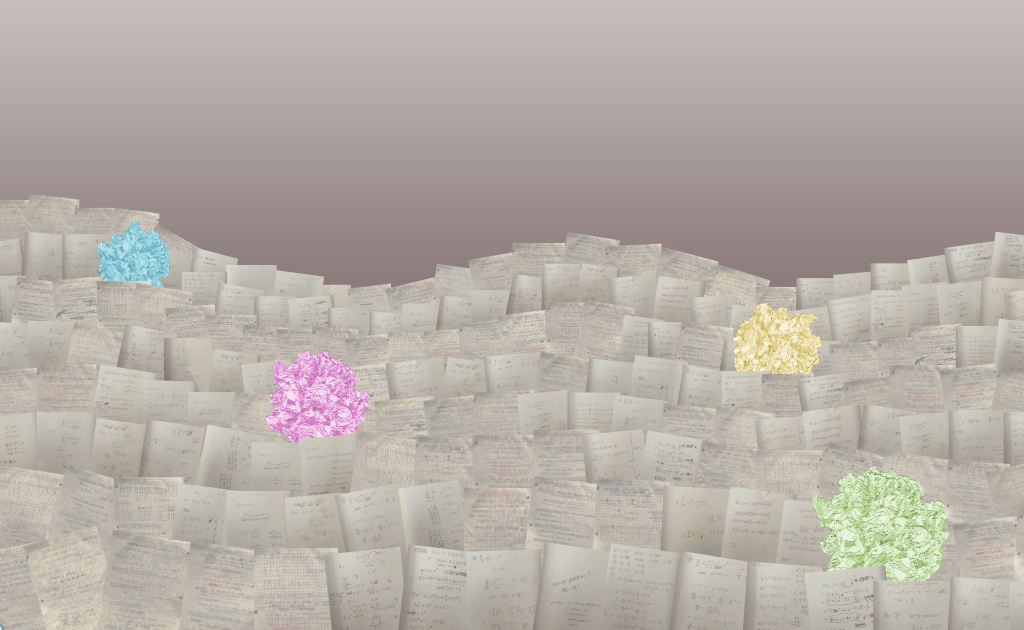
We tested different sizes of notes/handwriting and different color palettes. Ultimately we decided that the background should be white/paper-colored to better emphasize the concept and not clash with the lighting that we were in the process of implementing.

Our time in the studio helped us recognize when lag would occur with the motion capture system which influenced the length of the animations.
Motion Capture, Lighting & Audio
The rare times we were able to get in the Black Box were essential in helping us put all the pieces of technology together cohesively. We were able to test out music, animations, and lighting in tandem, and made adjustments to each in order for them to fit together nicely. In the studio we also determined that it would be good to have audiovisual feedback not only for interacting with the sculptures, but also with the garden tools. We created sounds for when each tool was picked up, and programmed a spotlight to shine on them only when all three were placed back in the center together.
The music was designed in Ableton and programmed in Max MSP with techniques for spacializing the sound. The Max program routed to the Qualysis motion capture system as well as to Resolume in order to trigger sound, lighting, and animations. It was a valuable learning experience to work with all of these different programs and understand how they can work together. Each program added something special and beautiful to the piece as a whole, just as each member of the team brought a unique perspective and talent that made our work complete.

 NOTES ON GROWING